


1:15
Many famous celebrities like Deepika Padukone, Shah Rukh Khan, Karan Johar, or Honey Singh have experienced depression. But it was surprising when star kids like Suhana Khan, Shaheen Bhatt, and Ira Khan also faced depression at quite a young age.So can children also experience depression?Actually, it's quite normal for children to sometimes be quiet, get angry over small things, yell, become irritated, and then after a while, your child starts playing again.But sometimes children start staying quiet more often, or this irritability becomes more noticeable. And when these symptoms persist for more than a week, your child may not be okay and could be experiencing depression.According to research, about 3% of children and 8% of teenagers experience depression.There can be many reasons for depression in children, such as: Family history or genetic history, meaning if someone in the family, especially parents, has a history of depression, stressful events like the death of a loved one, parents' divorce, or a physical injury or illness, or being bullied by other children at school. All these things can be reasons for your child to develop depression.Now the question arises, how to know if your child has depression:If a child has depression, these symptoms will be visible:Your child may seem sadder or more irritated than before, meaning their mood is changing.They lose interest in activities they used to enjoy.Energy levels decrease significantly, or they feel very tired.Your child starts talking negatively, like "I'm not good," "I don't have any friends," or "I'm not good at studying."Your child starts eating much less or much more than usual.Your child is sleeping too much or not sleeping enough.source; https://www.ncbi.nlm.nih.gov/pmc/articles/PMC8465814/ https://www.ncbi.nlm.nih.gov/pmc/articles/PMC3788699/

1:15
Loneliness affects one’s mental health to a great extent. World Health Organization states that 1 in 4 older adults experience loneliness and between 5 to 15 per cent of adolescents experience loneliness which affects their mental health.Mental health; a state of mental well-being has its very own importance in each individual’s life.However, mental illnesses have become a leading cause of disability worldwide. And this COVID-19 pandemic has added a burden across the population.What is loneliness doing?Loneliness is one of the major public mental health issues. Evidence shows that loneliness is associated with depression as well as certain other mental health problems. Across all ages and regions; anyone- anywhere can feel lonely.There can be severe impacts of loneliness on health and lifespan. World Health Organization says that people who feel loneliness for longer durations:More likely suffer with anxiety, depression, suicide and dementiaHave increased risk of cardiovascular diseases and stroke.Face a higher risk of early death.Loneliness just not only harms the individuals but they have a severe negative impact on the society.Why are people so lonely?Some people find it difficult to adjust to certain changes in life. Some factors responsible are:Work from home jobsChildren settling in different cities due to their studies/ jobsFrequent change of school among kidsWhat can we do?Some ways that can help reduce loneliness:Bring older and younger generations together, where they can share dining and enjoy some recreational activities.Gather for parties, movies, games etcForm and participate in clubsMaintaining healthy relationships among peopleEngaging older adults in the community and other social groups.Sharing a carpoolFor a better mental health of the society, it is important that we bring together people from all the age groups and all regions to combat loneliness.Source:-1. https://www.who.int/groups/commission-on-social-connection#:~:text=Anyone%2C anywhere%2C can be lonely,of our communities and society.2. https://www.ncbi.nlm.nih.gov/pmc/articles/PMC9636084/3. https://www.apa.org/monitor/2019/05/ce-corner-isolation
1:15
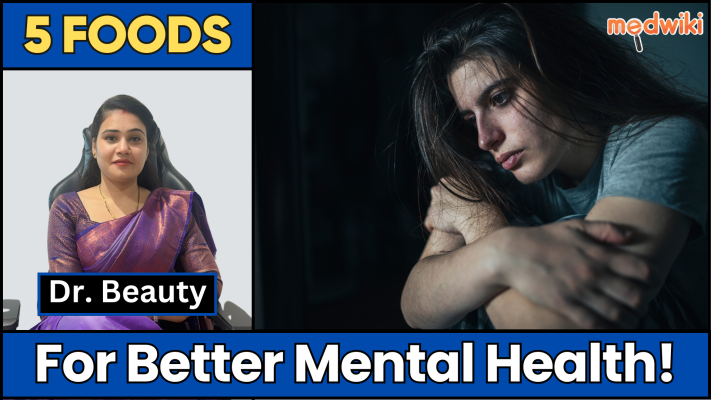
Whenever you have an exam, you feel nervous, but along with that, you also start feeling a strange pain in your stomach, and sometimes even get diarrhea. Happens, right?Now think, why do you start feeling angry when you're very hungry?This is because the brain and gut are related to each other. So it's worth thinking, if we eat good and healthy food, our brain will be healthy too.Let's learn about 5 Superfoods that are great for your mental health:Avocados: Avocados are rich in vitamins B3, B5, B9, vitamin C, and vitamin E. These vitamins play a crucial role in keeping brain nerves healthy and protected, producing neurotransmitters, and maintaining blood flow in the brain. Eggs: Eggs contain vitamins B1, 2, 3, 6, and 12, which help the brain function normally.Additionally, eggs contain choline and leutin, which increase your memory power. Walnuts: Walnuts are packed with antioxidants that protect the brain from damage, enhance memory and learning, and prevent dementia, the disease of losing memory.Salmon: Salmon is a fish rich in Omega 3 fatty acids, which protect the brain from damage, and its antioxidants protect your brain from age-related mental problems. Blueberry: Blueberries have a higher concentration of antioxidants than any other fruit. These antioxidants improve your brain's memory and keep the brain young.source.. https://www.researchgate.net/publication/343534587_The_effect_of_food_on_mental_health
1:15
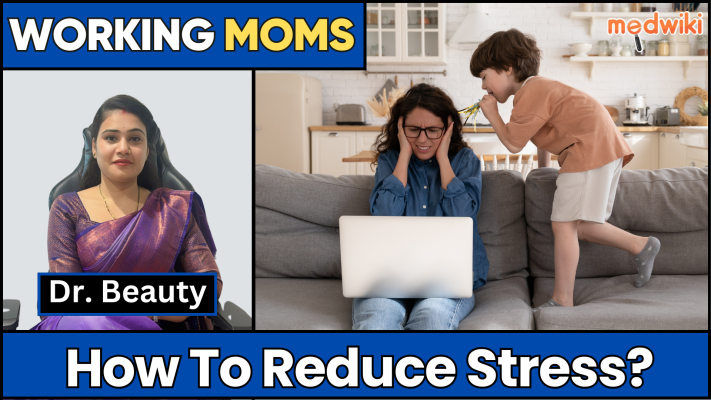
According to a survey conducted in 2022, 38% of working moms experienced complete mental and emotional breakdowns, and 55% of working moms faced recurring emotional and mental breakdowns or workplace burnout.Are you a working mom? Then you must relate to this: waking up at 5 AM, getting yourself ready, preparing meals for your children, sending them off to school, then heading to the office for an 8-hour workday. Coming back home, you dive straight into household chores without a break, and before you know it, it's nighttime.Once again, you didn't get to play with your child or spend quality time with them, and you fall asleep thinking about it because the same routine awaits you tomorrow.Every day, while trying to meet the diverse demands of your family, children, husband, and office, you often forget to take care of yourself. After managing so much, when no one appreciates you, or someone says you’re not raising your child properly, or that you can’t do your job well because of family and childcare responsibilities, this stress turns into burnout.This is also known as emotional, mental, and physical breakdown. So, what can you do to balance your job and take care of your child without stress? It's simple, just follow these 5 rules:1.Plan a strict routine where you set separate times for household chores and office work. This creates a boundary: no housework during office time and no office work during home time.2. Rule is to find time for yourself. Plan the next day’s tasks the night before, order groceries online, or decline unnecessary social events. Use this time to take care of yourself.3. Rule is to let go of guilt for not providing perfect parenting due to work or not giving enough time to your family. Don’t compare yourself to others or measure your worth by someone else's expectations. Instead, accept that you are a great mother.4. Rule is to learn to say “NO.” Many people find it hard to say no because they worry about being disliked. However, if you know that doing a particular task or going out with a friend is less important than your personal life, it’s okay to say no. There’s no problem in that. 5. Rule is to share your workload with your partner, your husband. They can help you significantly, reducing your stress.Source:- 1. https://link.springer.com/article/10.1007/s10826-017-0892-4 2. https://www.researchgate.net/publication/312566114_DETERMINANTS_OF_WORK-LIFE_BALANCE_FOR_WORKING_MOTHERS

1:15
Depression can be managed using various antidepressants, cognitive behavioral therapy, and natural herbs or remedies.However, there are several ways to alleviate depression without medications, including:1. Exercise: Engaging in at least 30 minutes of physical activity such as walking, cycling, dancing, or swimming can release endorphins, which are natural mood enhancers that help reduce stress and depression.2. Meditation: Practicing meditation for 10-15 minutes daily can foster openness and acceptance, uplifting your mood and decreasing depression.3. Relaxation Techniques: Incorporating daily yoga for 30 minutes, enjoying beautiful scenery, or taking warm baths can help reduce symptoms of depression.4. Music Therapy: Listening to music daily while showering, gardening, or cooking can boost your mood, increase relaxation, and lower stress, contributing to reduced depression.5. Herbal Remedies: Using herbs and supplements with antidepressant properties, such as St. John's wort, ginseng, or 5-HTP (5 hydroxytryptophan), may alleviate depressive symptoms.6. Healthy Lifestyle: Maintaining a balanced diet rich in fruits and vegetables, ensuring 7-8 hours of sleep each night, and avoiding alcohol and drugs can help diminish the symptoms of depression.Source :-1. Natural Relief for Depression. (2024, April 19). Natural Relief for Depression. https://www.hopkinsmedicine.org/health/wellness-and-prevention/natural-relief-for-depression2. Li, M., Wang, L., Jiang, M., Wu, D., Tian, T., & Huang, W. (2020). Relaxation techniques for depressive disorders in adults: a systematic review and meta-analysis of randomized controlled trials.International Journal of Psychiatry in Clinical Practice,24(3), 219-226.https://pubmed.ncbi.nlm.nih.gov/32425133/

1:15
Stress is very common in people of all age groups. It can be due to the workplace, some disease, or anything else. People suggest doing yoga, and exercise can reduce stress level. But, we will talk about a few foods that can be beneficial in reducing stress.Such as: 1. Foods rich in Vitamin B12: Foods such as meat, liver, cereals and eggs are rich sources of vitamin B12 as they reduce inflammation in the body, and decrease in cortisol levels and stress.2. Omega-3 fatty Acids: Fish like salmon, tuna, mackerel and eggs are rich sources of animal-based Omega- 3 fatty acids while avocado, walnuts, chia seeds, and flaxseeds are plant-based Omega 3 fatty acids, can potentially reduce inflammation and stress in the body.3. Foods high in magnesium: Magnesium helps in reducing inflammation in the body, and metabolize cortisols. During stress, your body eliminates a lot of magnesium through urine, due to which the cortisol levels increase in your body. Foods such as pumpkin seeds, almonds, pistachios, broccoli, bananas, and avocado are high in magnesium.4. Foods rich in fibers and probiotics: Foods high in fiber such as fruits, vegetables, whole grains, whole grain oats, and legumes are high in fiber content and are also rich in prebiotics, which is good for your digestive health, which leads to more serotonin levels in the body and decreases stress. Source:-1. Naidoo U. (2020). Eat to Beat Stress. American journal of lifestyle medicine, 15(1), 39–42. https://doi.org/10.1177/15598276209739362. Naidoo U. (2020). Eat to Beat Stress. American journal of lifestyle medicine, 15(1), 39–42. https://doi.org/10.1177/1559827620973936

1:15
A healthy brain and a sharp memory is always a necessity. Whether you are a kid, student, independent or growing old, your brain should always stay young to maintain focus, memory, learning and coordinate with other body parts.Here are 5 best foods that can boost your brain power and improve your memory:-1. Fatty fish: Fish like salmon, tuna, and mackerel are rich sources of Omega 3 fatty acids, a healthy type of fat that makes up about 50% of your brain nerves. Omega 3 fatty acids can lower the rate of Alzheimer's disease and memory decline because of their antioxidant and anti-inflammatory properties.2. Berries: Accoryto a study conducted in Harvard’s Brigham, eating berries like strawberries, blueberries and raspberries are linked to delay the memory decline by 2 years in patients with Alzheimer's disease. Researchers say that these berries contain flavonoids, a pigment found in plants which helps to boost memory.3. Caffeine: If you are a tea or coffee drinker, than you have can have an improved brain function. According to a study published in the Journal of Nutrition, the people who consumed tea or coffee everyday, had a better brain function due to caffeine found in tea and coffee, which increases focus and memory.4. Tomatoes: Tomatoes contain lycopene which is a potential antioxidant and anti-inflammatory compound which is able to reach the brain with the blood and help to protect the brain and prevent memory loss.5. Pumpkin seeds: Pumpkin seeds are rich in zinc, magnesium and vitamin B which helps in memory boosting and reducing depression by producing more hormones like serotonin and dopamines.Source:-1. Foods linked to better brainpower. (n.d.). Foods linked to better brainpower. Retrieved June 14, 2024, from https://www.health.harvard.edu/healthbeat/foods-linked-to-better-brainpower2. Kennedy D. O. (2015). Review: power foods for the brain. Cerebrum : the Dana forum on brain science, 2015, https://pubmed.ncbi.nlm.nih.gov/26034529/3. Gómez-Pinilla F. (2008). Brain foods: the effects of nutrients on brain function. Nature reviews. Neuroscience, 9(7), 568–578. https://doi.org/10.1038/nrn2421

1:15
Schizophrenia is a serious mental problem that affects less than 1% of adults, in early 20s in males and during late 20s in females, globally.History of Schizophrenia:"Schizophrenia" was termed by Eugen Bleuler, a Swiss doctor in 1908. Before that, people with schizophrenia were thought to be punished by gods or controlled by evil spirits.In the Middle Ages, people with schizophrenia were thought to be possessed by demons. People even did dangerous things like cutting holes in the skulls of schizophrenic patients to fix it.Understanding Schizophrenia:“Schizo” means “split” and “Phrenia” means “brain”, which means fragmented pattern of thinking. Schizophrenia and having split personality aren’t the same.Schizophrenia is a mental disorder characterized by psychosis, where people can't differentiate between what's real and what's not, disturbed thinking, emotional responses, and social interactions.It can happen to anyone, and is caused by a mix of genetics, brain chemicals, and brain differences.Symptoms can be different for everyone and includes:Delusions: Which means having false beliefs that aren't true, like feeling someone is about to hurt you.Hallucinations: Which means hearing voices , seeing, or feeling things that aren't really there.Disorganized speech: Which means having difficulty putting thoughts into words that make sense.Abnormal behaviour: Which means acting odd, or being silly and getting very upset suddenly.Schizophrenia is diagnosed through medical history, physical examinations, and psychiatric evaluations to identify symptoms like delusions, hallucinations, and disorganized speech, which is persistent for at least 6 months.Source:-1. Michael J Owen, Akira Sawa, Preben B Mortensen, Schizophrenia, The Lancet, Volume 388, Issue 10039, 2016, Pages 86-97, ISSN 0140-6736, https://doi.org/10.1016/S0140-6736(15)01121-6. (https://www.sciencedirect.com/science/article/pii/S0140673615011216)2. Rahman, T., & Lauriello, J. (2016). Schizophrenia: An Overview. Focus (American Psychiatric Publishing), 14(3), 300–307. https://doi.org/10.1176/appi.focus.20160006Disclaimer:-This information is not a substitute for medical advice. Consult your healthcare provider before making any changes to your treatment.Do not ignore or delay professional medical advice based on anything you have seen or read on Medwiki.Find us at:https://www.instagram.com/medwiki_/?h…https://twitter.com/medwiki_inchttps://www.facebook.com/medwiki.co.in
Shorts

Overcome Depression: When to talk to a doctor!

Mrs. Prerna Trivedi
Nutritionist

What is Dyslexia, How dangerous it is, How to Diagnose and Manage Dyslexia!
Mrs. Prerna Trivedi
Nutritionist
Top things you start hiding during depression
Mrs. Prerna Trivedi
Nutritionist

Is your child depressed?
Mrs. Prerna Trivedi
Nutritionist

Know Us
@2026 Medwiki Pvt Ltd. All Rights Reserved