

1:15
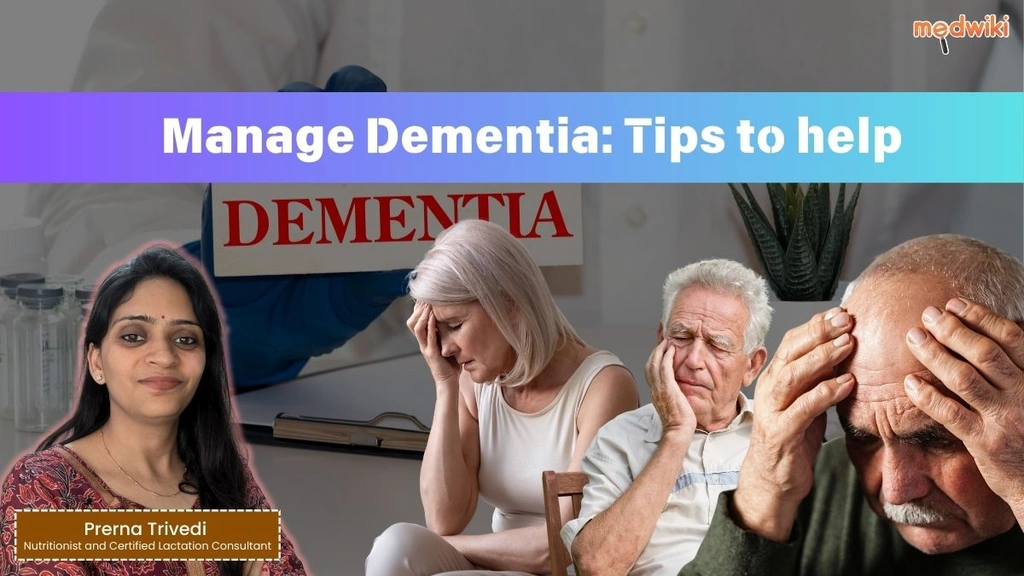
Living with dementia can be challenging, but there are ways to help individuals enjoy their daily lives and maintain independence.3 Tips to Help People with Dementia:Staying Healthy and Active:Exercise helps improve both physical and mental health—try simple activities like walking or yoga.Eating balanced meals, rich in fruits, vegetables, and proteins, supports brain health.Avoid smoking and alcohol, as they can worsen symptoms.Regular health check-ups help track any changes and ensure proper care.Keeping the Mind Engaged:Using lists or calendars helps remember important tasks and reduces stress.Hobbies like painting or gardening help keep the mind active and boost mood.Puzzles, games, or learning something new can slow down cognitive decline.Staying socially connected through family, friends, or groups provides emotional comfort and support.Planning Ahead:Designate trusted people to help with decision-making when needed.Write down your preferences for future care, ensuring your wishes are known.Carry ID and emergency contact information to stay safe when going out.Joining support groups offers emotional strength and shared experiences.Even though dementia has no cure, these tips can help manage symptoms and improve quality of life, promoting independence and well-being.Source:-1.https://www.who.int/news-room/fact-sheets/detail/dementia
1:15
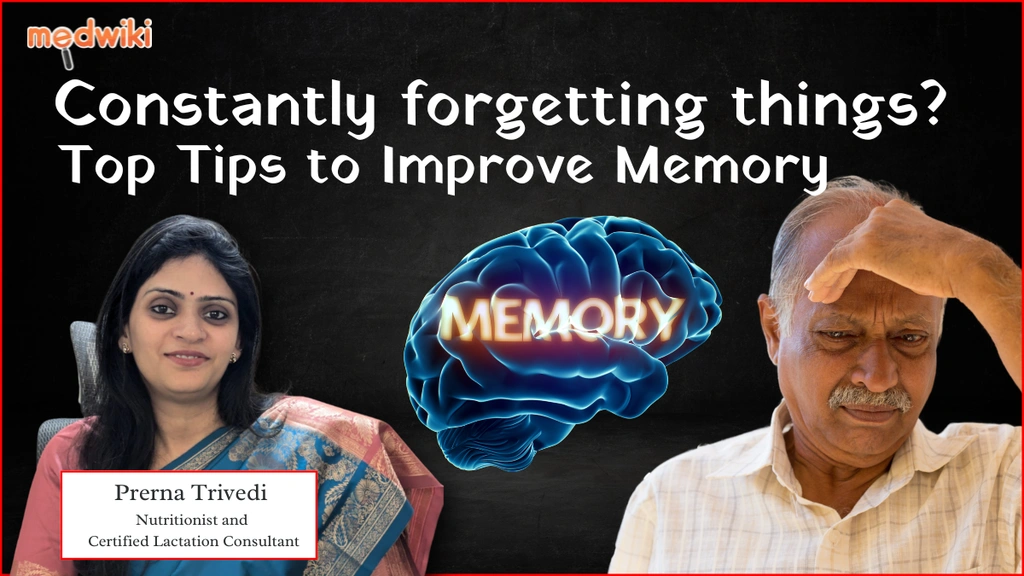
Hi everyone, today, we'll be exploring what dementia is, and some lifestyle factors that can reduce the risk of Dementia.Currently, more than 55 million people have dementia worldwide and every year, there are nearly 10 million new cases adding in. Dementia is currently the seventh leading cause of death.This sounds like a real big number impacting the lives of several people!!What is Dementia?Dementia is a condition that brings decline in mental abilities of an individual and makes it harder for him to remember things, think clearly. It impacts the overall daily tasks.While it's more commonly seen in older people, not everyone will get it.Things like age, high blood pressure, high blood sugar, being overweight/ obese, no physical activity, old set bad habits of alcohol and smoking, and also being socially isolated and depression makes it more likely for one to get dementia.It is interesting to know that certain lifestyle changes can reduce the risk of Dementia, even for the people with a family history of dementia.3 lifestyle changes to prevent Dementia 1. Aerobic exercises: Aerobic exercises like walking, running, swimming, cycling or even dancing are good for the brain because theyIncreases blood flow: They nourish brain cells and reduce the risk of blood vessel damage.Reduces inflammation: As it contributes to the buildup of abnormal proteins beta-amyloid protein.It is recommended for adults to do at least 150 to 300 minutes of moderate-intensity aerobic exercise each week. 2.Eating Right for a Healthy Brain: There are some special diets that helps in keeping our brain healthy. Like the Mediterranean, DASH (Dietary Approaches to Stop Hypertension) and MIND (Mediterranean-DASH Intervention for Neurodegenerative Delay) diets.These diets focus on eating foods that are good for brain, like:Fruits and vegetables: These contain antioxidants, which can help protect the brain cells.Fatty fish: This is a great source of omega-3 fatty acids, a nutrient important for brain health.By eating these foods and avoiding red meat and processed foods, you can help reduce inflammation in your brain and keep it healthy. 3. Take quality sleep. Sleep is important for brain health. When you sleep, your brain cleans itself of harmful substances. But if you don't get enough sleep or wake up often during the night, your brain can't clean itself properly. This can lead to problems over time.If you often feel tired when you wake up or have trouble sleeping, talk to your doctor. They can help you find out why you're not sleeping well and they may also suggest ways to improve your sleep.Dementia is killing a lot of people. It is important to provide care and support to a person living with dementia because this can be challenging, and impacts the overall health and well-being.Source:-1. https://www.who.int/news-room/fact-sheets/detail/dementia 2. https://www.health.harvard.edu/mind-and-mood/how-to-lower-your-dementia-risk#:~:text=Aerobic exercise.&text=Another common form%2C vascular dementia,risk of blood vessel damage.
1:15
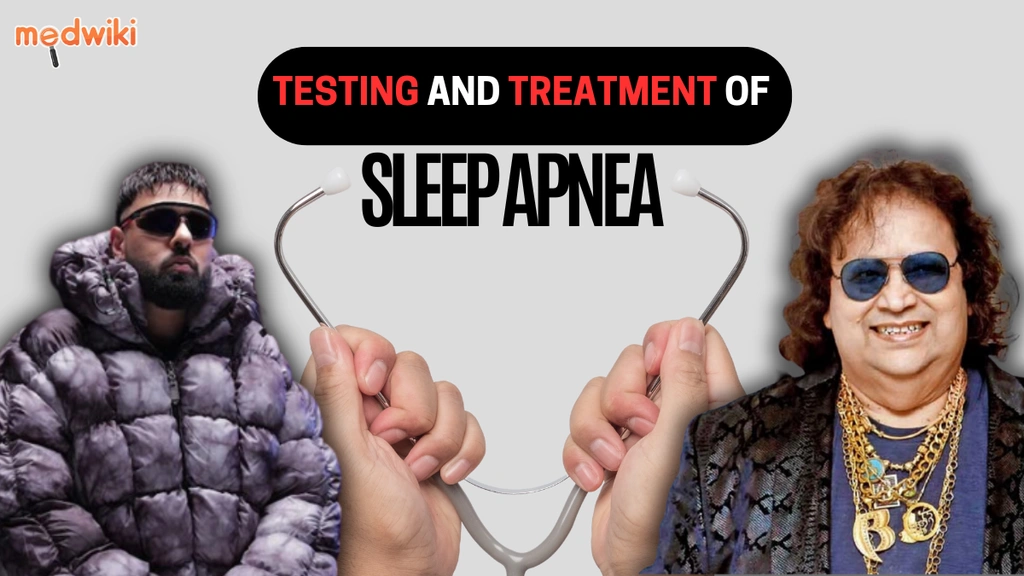
Did you know that several Indian celebrities have struggled with Sleep Apnea? Big names like Bappi Lahiri and Badshah have faced this condition. Bappi Lahiri, the legendary singer and music composer, even lost his life in 2022 due to complications from Sleep Apnea. This isn't just about celebrities—Sleep Apnea can affect anyone.What is Sleep Apnea?Sleep apnea is a condition where your breathing stops and starts repeatedly while you are asleep. This happens because your airway gets blocked. When the airway gets blocked, oxygen levels in the body drop causing the person to wake up and begin breathing normally again. These awakenings are often very brief, sometimes only a few seconds, interrupting the sleep cycle.How to find out Sleep Apnea?Before seeing a doctor, you can take the first step by using our Sleep Calculator to understand your sleep patterns better. It can help you determine if you might be at risk for Sleep Apnea.To confirm Sleep Apnea, doctors usually recommend a sleep study called Polysomnography (PSG). This test monitors:Brain wavesBlood oxygen levelsHeart rate and breathingEye and leg movements.However, this sleep test itself does not provide the location of the obstruction, so further evaluation of the upper airway are necessary to identify potential sites of blockage. These include:i) Nasopharyngoscopy: A procedure in which a flexible fiberoptic endoscope is introduced through the nose and throat to observe structures that narrow the airway and compromises airflow.ii) Sleep endoscopy is similar to Nasopharyngoscopy, however performed under mild sedation. The objective of this test is to reproduce what occurs to the patient's upper airway in a sleep state, and identify areas and structures causing the obstruction.Treating Sleep ApneaThere are some non-surgical and surgical treatment options to treat Sleep Apnea. These include:Continuous Positive Airway Pressure (CPAP) machine: This machine blows air into your nose and mouth to keep your airway open. This method might involve, losing weight, avoiding alcohol, and sleeping on your side to help further.Surgery: In some cases, surgery can be helpful to improve airway.If you think you might have Sleep Apnea, don't ignore the signs. 936 million people worldwide are suffering from mild to severe Sleep Apnea, yet many remain undiagnosed. Talk to your doctor and take the first step towards better sleep and a healthier life.Source:-1. https://stanfordhealthcare.org/medical-conditions/sleep/obstructive-sleep-apnea/treatments.html 2. https://pubmed.ncbi.nlm.nih.gov/31300334/

1:15
Loving yourself is nowhere wrong, but going to an extent when you start suffering from a disorder. This is worrisome.If you or anyone you know suffer from these symptoms:Excessive sense of self importanceFantasies of success, power, beauty or loveHaving a special feeling of special for oneselfUrge for extra admirationSense of being authoritativeBeing selfish to achieve one’s own endsLack of empathyBeing jealous of othersBeing arrogantDon’t take it lightly. These might be symptoms of Narcissistic Personality DisorderCauses of Narcissistic Personality DisorderThese symptoms sound disturbing. Isn’t it? What can cause somebody to have such kind of emotions and feelings:This can be led by some early childhood experiences like:Feeling of rejectionExcessive praise given by parents or caregiversExcessive judgement done by parents or caregiversAny kind of trauma or abuseTreatment for Narcissistic Personality DisorderThe treatment involves a talk with the mental health professional. Talking in a positive manner can help in overcoming this disorder.There is no FDA approved medication for Narcissistic Personality Disorder. However, some medicines, like antidepressants, mood stabilizers, and antipsychotic medicines, may help in relieving the symptoms.It is always good to know early about any disorder that can impact us and seek help as and when required.Source:-1. https://www.health.harvard.edu/blog/biking-and-sex-avoid-the-vicious-cycle-201209145290 2. https://www.betterhealth.vic.gov.au/health/healthyliving/cycling-health-benefits

1:15
Migraine is a pulsating headache, usually seen as recurrent attacks of moderate to severe intensity and is often lifelong. Untreated attacks last from 4 to 72 hours.Migraine attacks typically include headache, which is:Of moderate/ severe intensityOn one-side or behind the eyeIs pulsating in qualityAggravates with physical activityHas a sensitivity to light and soundsAccompanied by nausea.Factors that can increase Migraine headache:There are multiple factors, which may vary from person to person. 3 main factors include: 1. Certain environmental changes:i) Sudden change in weatherii) Too much or not enough sleepiii) Strong smellsiv) Loud sound or bright/ flashing lightv) Skipped meals 2. Mental Health concerns:i) Certain emotionsii) Stressiii) Depressioniv) Anxiety 3.Medical reasons:i) Motion sicknessii) Low blood sugariii) Hormonal changesiv) ) OverexertionWho is more likely to have Migraine?Worldwide around 1.1 billion people are suffering with migraine headaches.Migraines occur both in children and adults. But it has been seen that adult women are affected by this three times more than men. In women, migraine often relates to changes in hormones.Treatment of Migraine:Relieving symptoms and preventing additional attacks is the main treatment of Migraine. Quick tips to ease symptoms include:Having a cup of coffeeNapping or resting with eyes closed in a quiet, dark roomPlacing a cool cloth/ ice pack on foreheadDrinking lots of fluidNatural treatments for migraine include Vitamin B2 (riboflavin), magnesium, coenzyme Q10, and a medicinal plant butterbur.Medicinal Treatment for Migraine:There are two different types of medications for Migraine:Acute medications: Taken as soon as symptoms occur to relieve pain.Preventive medications: Taken daily to reduce future attacks and their severity.Lifestyle changes that can help reduce or prevent migraine attacks:ExercisingAvoiding food/ beverages that trigger headachesEating regularly scheduled mealsAdequate hydrationA consistent sleep schedule.Maintaining a healthy weight.Everyone with migraine needs effective treatment at the time of the headaches. Try our simple ways and get rid of this recurring pain.Source:-1. https://www.ncbi.nlm.nih.gov/pmc/articles/PMC8904749/ 2. https://www.ninds.nih.gov/health-information/disorders/migraine
1:15
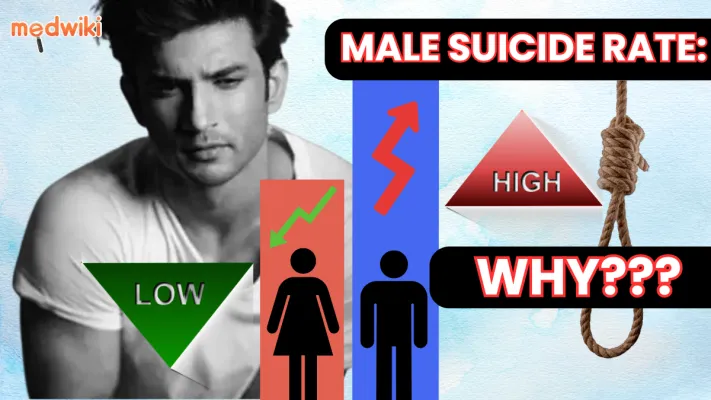
Did you know that the number of males dying by suicide is 3-4 times higher than females? Around the world, one person dies by suicide every 11 minutes. According to WHO, 70-80% of total suicide cases globally are males. In fact, females attempt suicide more often than males, but more males die by suicide. To understand why this happens, watch the entire video, as I will explain further.Why do males commit suicide?The answer lies in our society and its mindset.In our society, there is a long-standing belief for men: "Be a man," "You are a man, you must be strong," "Men don't cry."Because of these societal expectations, men don't open up more often, don't share their problems or pain with anyone, because doing so would make them "less of a man." Even at home, a mother tends to talk more with her daughter than with her son, which is why she understands her daughter's problems more but doesn't realize what her son is going through. Men are expected to be not just physically strong but emotionally strong as well, which makes them less expressive. But they are human too—they feel stress, they want to cry. These things lead to mental problems like depression and anxiety in men, increasing their risk of suicide.Why do males commit suicide?The most common reasons for suicide are relationship issues, heartbreak, financial problems, and unemployment. Not being able to share these problems with anyone or not getting support from others is a big factor.Now, let’s talk about why more males die by suicide?According to the World Health Organization (WHO) and CDC reports, males often choose more lethal methods for suicide. In 50% of male suicide deaths, a weapon like a rifle or gun was used. The reason behind this is that men are believed to have a higher tolerance for pain, leading them to take such extreme steps where there's little chance of survival. Besides, males may also hang themselves, consume poison, or overdose on medicine to attempt suicide.The message I want to spread through this video is that we should understand that men are human too and need support and care. Respect their emotions, listen to their problems, and help them. No one is so strong that they don’t need support.Source:-1. https://www.cdc.gov/suicide/facts/data.html 2. https://www.who.int/data/gho/data/themes/mental-health/suicide-rates

1:15
Today even school children are handling their personal mobile phones so that they can connect with their friends and peers and to have their social media accounts on facebook, whatsapp, instagram, etc.. But remember, more the social platforms to connect, more is the risk of being bullied. Not just school children, anyone can become a target and get bullied.What is this form of bullying called?Bullying with the use of digital technologies, is known as CYBERBULLYING. Cyberbullying intends at scaring, angering or shaming the target.How can someone bully online?By posting embarrassing photos or videos of the target on social mediaBy sending abusive or threatening messages, images or videos to the targetSending messages to others on the target’s behalf or through fake accounts.Cyberbullying can have a long lasting effect on all dimensions of healthThe target might feel upset, embarrassed, afraid or angry all the time. This affects him mentally.The target might feel ashamed or lose interest in their favorite things. This affects him emotionally.The target might always feel tired or experience stomach aches and headaches. This affects him physically.How Cyberbullying affects Mental Health?Cyberbullying has a very strong effect on one’s mental health. It leads one to:Feeling of being ashamed, nervous, anxious and insecure.Withdraw from friends and familyHave negative thoughts about own-selfFeel guilty about things he/ she did or did not doFeel lonely or overwhelmedSuffer frequent headaches, nausea or stomach achesLose motivation to do thingsAll this together can perpetuate negative feelings and thoughts which can adversely affect one's mental health and well-being.Who all can help?It is very important for the target to seek help at this time. People who can help:Parents/ closed family member of a trusted adultCounselor or sports teacher at the schoolA professional counselor on helpline numbers.First thing first, block the bully and report. Social media companies are bound to keep everyone safe.Let us together keep everybody safe.Source:- https://www.unicef.org/end-violence/how-to-stop-cyberbullying

1:15
Bullying can have harmful and long lasting consequences on children. Not just physical, it might affect their emotional and mental well being too.Should we leave it to the child to manage on their own?Your child has the right to be safe. Yes, it is important we make them independent but as parents we should know the right time to intervene for our child’s well being.How can you help your child?Educate your children on bullying: If your child knows beforehand what bullying actually is, he will be able to identify it more easily. Knowing is the first step.Talk frequently and openly to your children: When parents talk about bullying to their children openly, they feel more comfortable in sharing their experiences. So, talk to them not just about their studies, but also about their feelings.Encourage your child to be a support: Your child can prevent their peers from being bullied, by offering support and questioning the bully behaviors. This will happen only when they know they have your full support.Build your child’s self confidence: Enroll your child in some activity classes within the community. This enhances their self-confidence. Also they will have a group of friends with the same interests.Be a good role model: Always treat other children and adults with kindness and speak up when someone else is being mistreated because this is what your children are learning from your behavior.Be part of their online experience: Technology is what every child is using these days. Start being familiar with all the platforms that your child uses. Understand and warn your children of what risks they can face further.Educating them about bullying is the first step. So, let us together take a pledge to educate beforehand and save our children from this world of bullying.Source:- https://www.unicef.org/parenting/child-care/bullying
Shorts

Overcome Depression: When to talk to a doctor!

Mrs. Prerna Trivedi
Nutritionist

What is Dyslexia, How dangerous it is, How to Diagnose and Manage Dyslexia!
Mrs. Prerna Trivedi
Nutritionist
Top things you start hiding during depression
Mrs. Prerna Trivedi
Nutritionist

Is your child depressed?
Mrs. Prerna Trivedi
Nutritionist

Know Us
@2026 Medwiki Pvt Ltd. All Rights Reserved